
BoE Holds at 3.75%, Signals Cuts as Inflation Cools
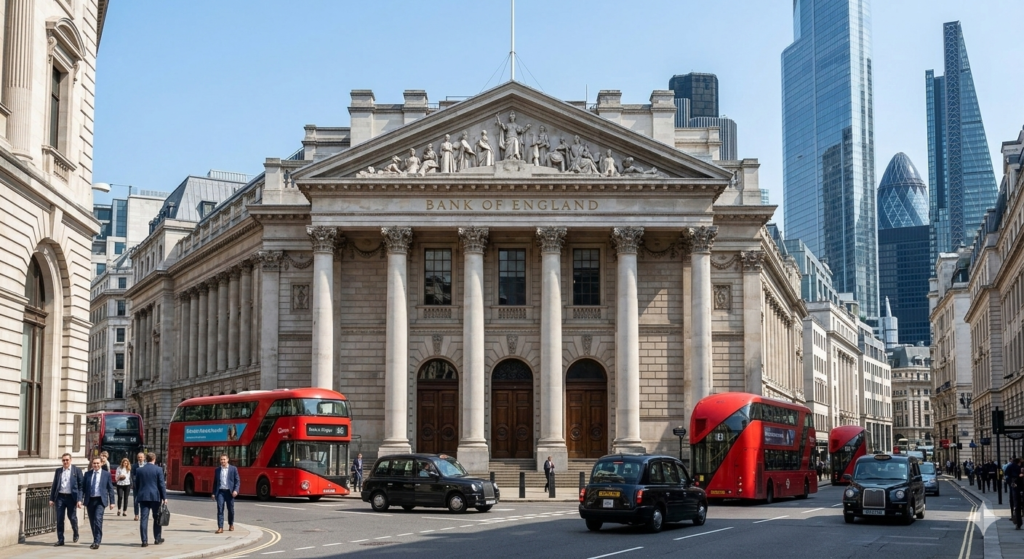
Bank of England Holds, Sees Cuts Ahead
The Bank of England (BoE) paused its tightening cycle in February, holding Bank Rate at 3.75%. The Monetary Policy Committee voted 5‑4 to keep rates unchanged on Feb. 5. In his post-meeting statement, Governor Andrew Bailey noted that UK inflation has fallen further toward the BoE’s 2% target (headline inflation was around 3.4% in December) and is expected to decline into 2026. Demand has been cooling, so the economy may soon require easier policy. Bailey said the bank now sees “scope for some further reduction in Bank Rate this year” if inflation continues to lose momentum, effectively signaling that rate cuts are likely later in 2026.
Supporting that view, external forecasts also shifted lower. Bank staff downgraded GDP growth to 0.9% for 2026 and raised the projected unemployment peak to 5.3%. Policymakers expect growth around 1% this year and inflation drifting toward target by late 2026, meaning that rate cuts (rather than hikes) are on the table. As investment strategist Koopman noted, “Slowing growth and falling inflation are highlighting that the Bank of England may soon move to ease policy”.
In the Eurozone, ECB officials echoed caution. Spain’s José Luis Escrivá said at a conference that the war-driven spike in oil prices would only add “tenths of a percent” to inflation, so the ECB is unlikely to adjust rates at its next meeting. Both the BoE and ECB emphasized that policy was already restrictive. The market is now pricing in about a 50% chance of a BoE cut by May 2026 and little or no change from the ECB before year-end. For now, U.K. borrowers and savers face no immediate rate relief, but are braced for easing as prices cool.
Pull quote: “Cooling demand and inflation have clearly lost momentum… This supports the case for easing,” said BoE economist Stefan Koopman.