
Fed and ECB Hold Rates as Inflation Cools
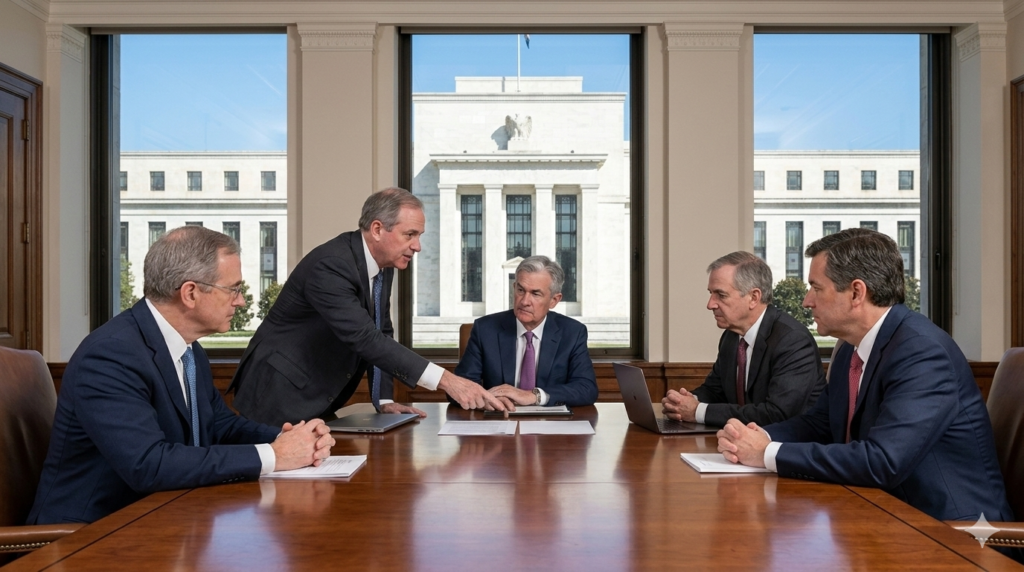
Fed and Central Banks Hold as Inflation Cools
Major central banks have largely paused their tightening cycle in early 2026, given easing inflation and economic uncertainties. A Reuters poll found Wall Street expects the U.S. Federal Reserve to hold the federal funds rate at 3.50–3.75% through at least mid-2026, deferring any cuts until after Chair Jerome Powell’s term ends (May 2026). The Fed’s last hike was in July 2023. New economic data suggest the U.S. economy is slowing: December core inflation ticked up slightly, but January saw stronger-than-expected job growth (130K, with unemployment down to 4.3%), so Fed officials expect to keep policy unchanged pending clearer trends.
In Europe, policymakers also exercised caution. The European Central Bank left deposit rates steady at 2.0% in March; Governing Council member José Luis Escrivá said it’s “very unlikely” the ECB will change rates at its next meeting, and any oil-driven inflation bump is only “tenths of a percent”. Similarly, on Feb. 5 the Bank of England held Bank Rate at 3.75%. Governor Andrew Bailey and his committee noted that UK inflation has come down toward the 2% target, and slowing growth gives “scope for some further reduction in Bank Rate this year” if inflation keeps easing. Markets are now pricing in the BoE’s first cut possibly by spring, and the ECB’s first move not until late 2026. As Oxford’s Michael Pearce commented on the US data, “With the economy and labor market stabilizing and inflation still elevated, we expect the Fed will remain on prolonged hold”.
Overall, global central banks emphasize flexibility. The IMF’s Jan 2026 outlook projects a slight downtick in inflation worldwide, with policymakers urged to preserve “price and financial stability” while rebuilding buffers. Many economists note that fiscal and geopolitical shocks (trade tensions, energy disruptions) remain downside risks. For now, with growth still around trend and inflation moderating from 2025 highs, the consensus is that major rates are at or near peak for this cycle across the U.S., Europe and other large economies.
Pull quote: “With the economy and labor market stabilizing and inflation still elevated, we expect the Fed will remain on prolonged hold,” said Michael Pearce, chief U.S. economist at Oxford Economics.